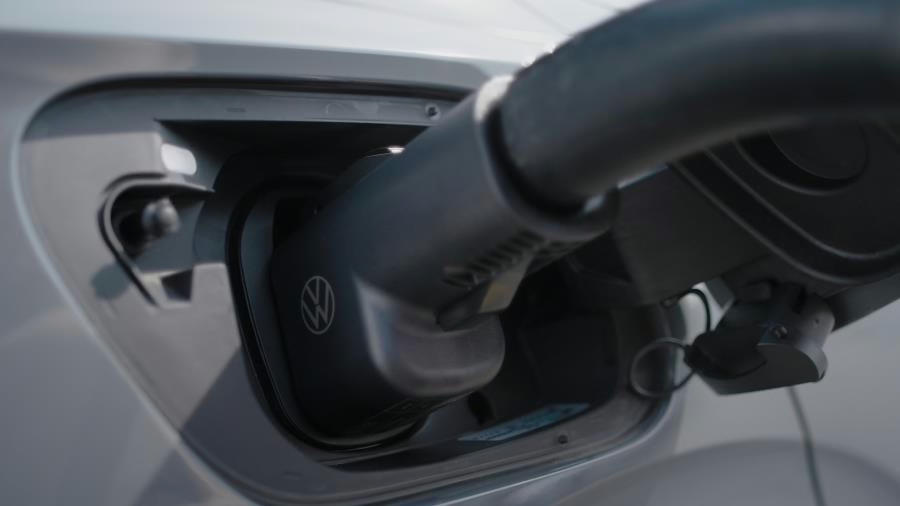
The automotive industry is undergoing one of its biggest shifts in years. While electric vehicles are no longer a novelty, 2025 and 2026 bring a major change in charging technology. More and more manufacturers are announcing support for the NACS (North American Charging Standard) connector — a system originally developed by Tesla.
Why NACS Matters
NACS became the dominant standard in the United States thanks to its simple design, high reliability, and access to a massive fast‑charging network. Europe has traditionally relied on CCS2, but growing pressure from manufacturers and drivers is pushing NACS into the European market as well.
Key advantages include:
- Smaller and lighter connector compared to CCS2
- Higher reliability during fast charging
- Broad manufacturer support — Ford, GM, Volvo, Polestar, Mercedes, and others
- Direct access to Tesla’s Supercharger network without adapters
What This Means for Drivers in the EU
The first European EV models equipped with NACS are expected to arrive in 2026. Charging station operators are already preparing for dual‑standard infrastructure — CCS2 and NACS side by side. For drivers, this means:
- Faster charging
- Better compatibility across brands
- Fewer issues on long trips
- Improved access to high‑power chargers
Impact on Auto Shops and Service Centers
Workshops will need to adapt to new customer expectations and technical requirements:
- Diagnostics and servicing of EV systems
- Inspection and maintenance of charging ports
- Installation of home wallboxes supporting NACS
- Technician training for high‑voltage systems
Shops that prepare early will gain a strong competitive advantage.
Conclusion
The shift toward NACS is one of the biggest automotive trends of 2026. It promises faster charging, easier use, and greater compatibility across the EV market. For drivers and service centers alike, it’s a development worth watching closely.
Leave a Reply