
The global automotive landscape is shifting faster than expected. While electric vehicles (EVs) have been steadily gaining traction for years, the recent surge in oil prices has dramatically accelerated consumer interest, government action, and industry investment. What was once a gradual transition is now turning into a strategic necessity for both drivers and manufacturers.
Oil Prices Are Reshaping Consumer Behavior
The latest oil price crisis — driven by geopolitical tensions, supply disruptions, and production cuts — has pushed fuel costs to multi‑year highs. For many households, this has turned traditional combustion‑engine vehicles into a financial burden.
As a result:
- Searches for EVs and hybrids have spiked across Europe and North America
- Drivers are increasingly calculating total cost of ownership, not just purchase price
- Fleet operators are accelerating electrification to stabilize long‑term operating costs
High fuel prices act as a catalyst: every spike pushes more consumers to seriously consider switching to electric.
EV Sales Are Rising Despite Market Challenges
Even with concerns about charging infrastructure and battery prices, EV sales continue to grow. Analysts note that the oil price crisis has created a “tipping point” where EVs become the more predictable and economical choice.
Key trends include:
- Record EV adoption in Europe, especially in markets with strong incentives
- Growing interest in used EVs, making electrification accessible to more buyers
- Increased demand for plug‑in hybrids, seen as a transitional solution
Manufacturers are responding by expanding production capacity, accelerating EV model launches, and shifting R&D budgets away from combustion engines.
Governments Are Pushing Electrification Harder
High oil prices also put pressure on governments to reduce dependency on fossil fuels. This has led to:
- Expanded EV purchase incentives
- Faster rollout of public charging networks
- Stricter emissions regulations
- New tax benefits for EV fleets and company cars
In many countries, EVs are now not only cleaner but also financially more attractive than petrol or diesel vehicles.
Charging Infrastructure Is Scaling Up
The oil crisis has indirectly boosted investment in charging infrastructure. Energy companies, utilities, and private investors see EV charging as a long‑term growth sector.
Current developments:
- Rapid expansion of fast‑charging corridors along highways
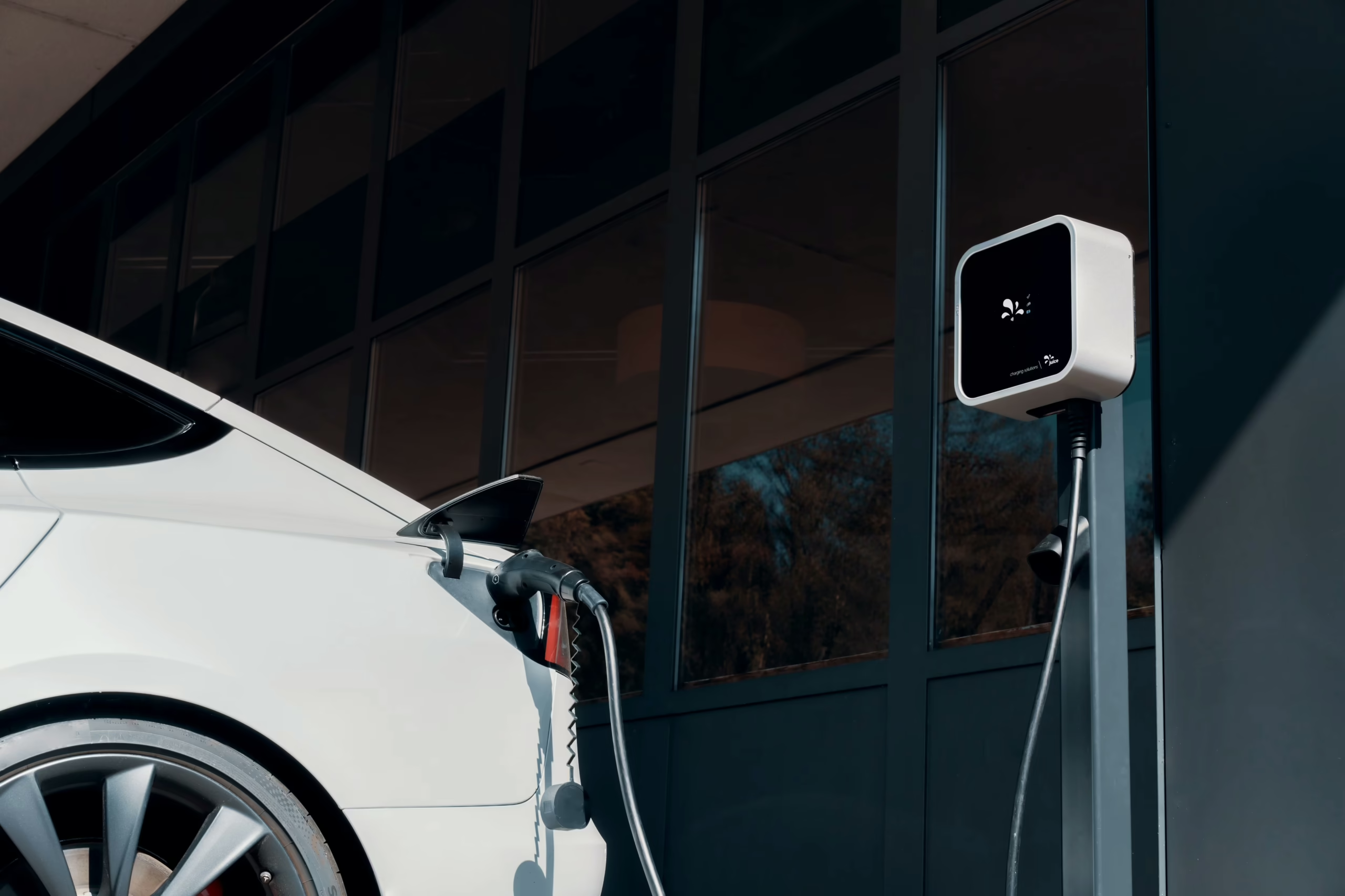
- Increased installation of home and workplace chargers
- Integration of renewable energy into charging networks
- Growing adoption of NACS and CCS2 dual‑standard stations
As charging becomes more accessible, the barriers to EV adoption continue to fall.
The Debate: Is the Oil Crisis the Main Driver of EV Growth?
There are two sides to the discussion:
Argument 1: Yes — Oil Prices Are Accelerating the EV Shift
Supporters say the oil crisis has:
- Made EVs economically superior
- Increased public awareness of energy dependency
- Forced manufacturers to prioritize electrification
- Strengthened political will for clean‑energy policies
From this perspective, high oil prices are a powerful motivator pushing consumers toward EVs faster than any marketing campaign could.
Argument 2: Not Entirely — EV Growth Was Already Inevitable
Others argue that:
- EV adoption was already rising due to technology improvements
- Battery prices continue to fall regardless of oil prices
- Charging networks were expanding before the crisis
- Long‑term emissions regulations were already shaping the market
In this view, the oil crisis simply accelerated a transition that was already underway.
Conclusion
Whether seen as a catalyst or merely an accelerant, the oil price crisis has undeniably pushed the EV market into a new phase of rapid expansion. Consumers are rethinking their long‑term mobility costs, governments are doubling down on electrification, and automakers are racing to meet demand.
For drivers, workshops, and the entire automotive ecosystem, this shift represents both a challenge and a major opportunity. One thing is clear: the future of mobility is becoming electric faster than anyone expected.
Leave a Reply